
[White Paper] 10 soft skills to thrive in the age of AI
Published on 05/10/2026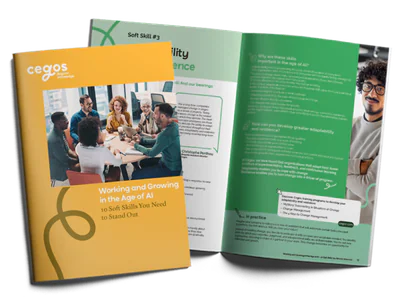
The Cegos Group releases its new white paper to help you discover the 10 soft skills to develop to stand out in a world transformed by artificial intelligence.
Artificial intelligence is already profoundly changing the way we work, learn, and make decisions. In this context, soft skills are becoming a key driver of performance and adaptability. The Cegos white paper “Working and growing in the age of AI: 10 soft skills you need to stand out” explores the 10 human skills to develop in order to work and grow with AI, strengthen judgement and turn human-machine complementarity into a lasting advantage.
Soft skills: what are they?
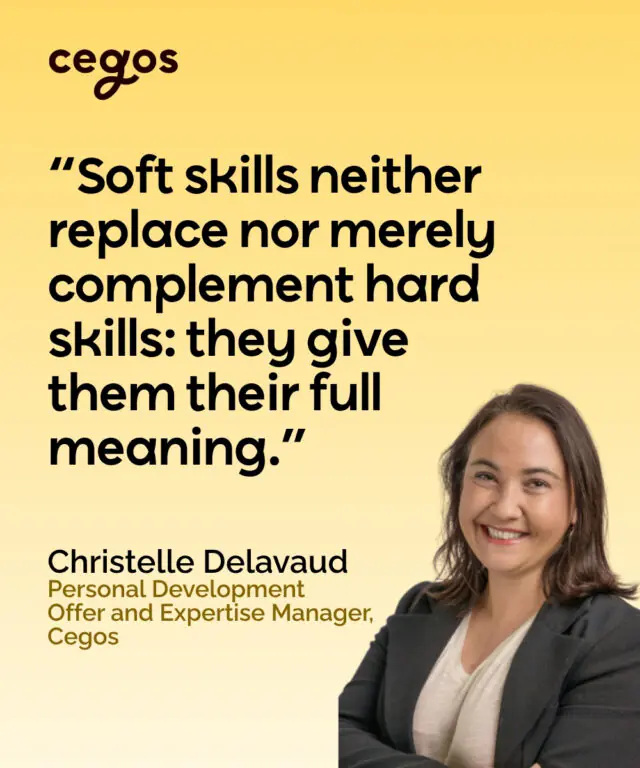
Soft skills are the capabilities that shape how we act, collaborate and adapt. They are not linked to one specific job, but to behaviours that are valuable across many professional contexts. They include communication, critical thinking, emotional intelligence and the ability to keep learning. In the age of AI, they matter even more, because they reflect what technology cannot replace.
The 10 essential soft skills to develop
This white paper explores the skills that help people work effectively with AI, while preserving the value of human contribution.
These include:
| Soft skill | Definition |
|---|---|
| Critical thinking and judgement | Analyse information, evaluate reasoning and make informed decisions |
| Ability to learn continuously | Acquire, unlearn and relearn at the pace of change |
| Adaptability and resilience | Adjust ways of working and bounce back in the face of change |
| Emotional intelligence | Recognise, regulate and draw on emotions to act effectively |
| Leadership | Set a clear direction, build trust and bring people together |
| Communication | Create shared understanding and foster meaningful dialogue |
| Creativity | Imagine original, relevant and actionable solutions |
| Human-AI collaboration | Distribute roles intelligently between humans and AI |
| Ethical awareness and responsibility | Question the impact of decisions and take ownership of outcomes |
| Self-leadership | Direct oneself with clarity, intention and autonomy |
These skills are neither innate nor reserved for a select few. They develop through action, feedback and experience.

What this white paper will help you understand and anticipate
This white paper helps you identify the skills that need strengthening in an AI-transformed environment. It also helps you spot the most useful levers for action, whether for yourself or for your teams. You’ll find practical guidance to work better with AI, without losing judgement or responsibility.
It is particularly useful if you want to:
- understand what AI is really changing in jobs and skills;
- better distinguish what can be automated and what must remain human;
- prepare your teams to evolve in a more unstable environment;
- strengthen adaptability, cooperation and judgement;
- build an HR or management approach to the skills of the future.
Content that is both strategic and practical
The white paper combines clear definitions, analysis of the key issues, concrete examples and action points to help develop each skill.
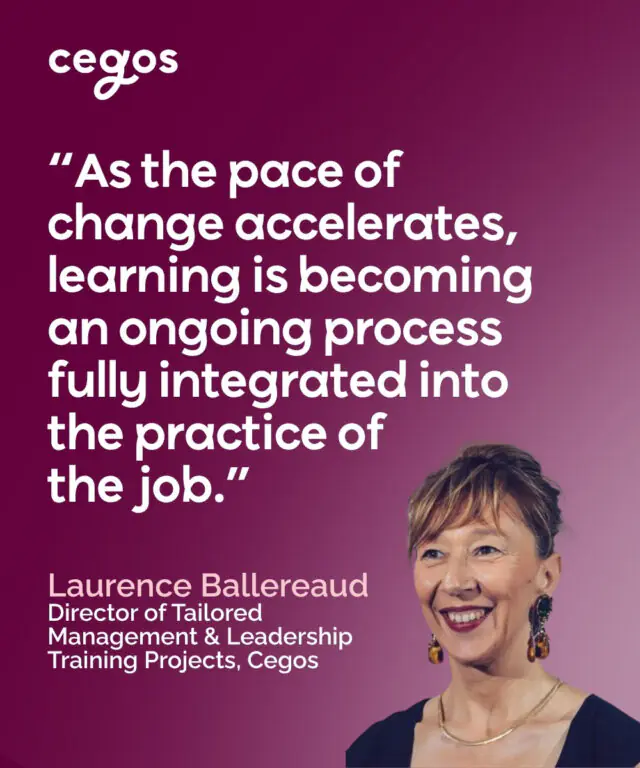
It also explains that AI can speed up execution, but that the quality of decisions still depends on human ability to interpret, arbitrate and take responsibility for the consequences.
Expertise grounded in real-world practice
For over a century, Cegos has supported organisations and individuals through change. This white paper draws on that experience, as well as on the findings of the international Cegos Transformations, Skills and Learning 2026 barometer.